Shibari and the art of tying
One of the things I often get asked to do during a session is the art of tying also known as bondage or a form of it called Shibari.
Bondage and shibari are two different things, one being considered as the western version of the ancestral art of tying up coming from Japan, shibari. Bondage refers to any way of tying including the use of cuffs, tape, belts, scarves etc… while shibari only uses ropes and is known for having a specific aesthetic.
There are different stories about the origins of shibari. One known thing is that rope was widely used in Japan especially in areas where metal was rare to find. Tying up with rope was a way to ensure prisoners wouldn’t run away and was used to torture them.
Shibari as we know it today was not a thing until the 1900s. It was eroticised in theatre and red light districts before making its way to the West in the mid-1900s. Nowadays Shibari is mostly used in BDSM contexts with the stigma that comes with it, even in Japan.
In Japanese shibari literally means « to tie ». Kinbaku is another Japanese word to describe erotic binding but both words are often used interchangeably. It is good to know that shibari - like many other BDSM practices can be used in various contexts that are not necessarily erotic or sexual. Both for the rigger, the one who ties up and for the model or rope bottom, shibari can be a very meditative experience, grounding ourselves in our bodies and in the connection with the other person.
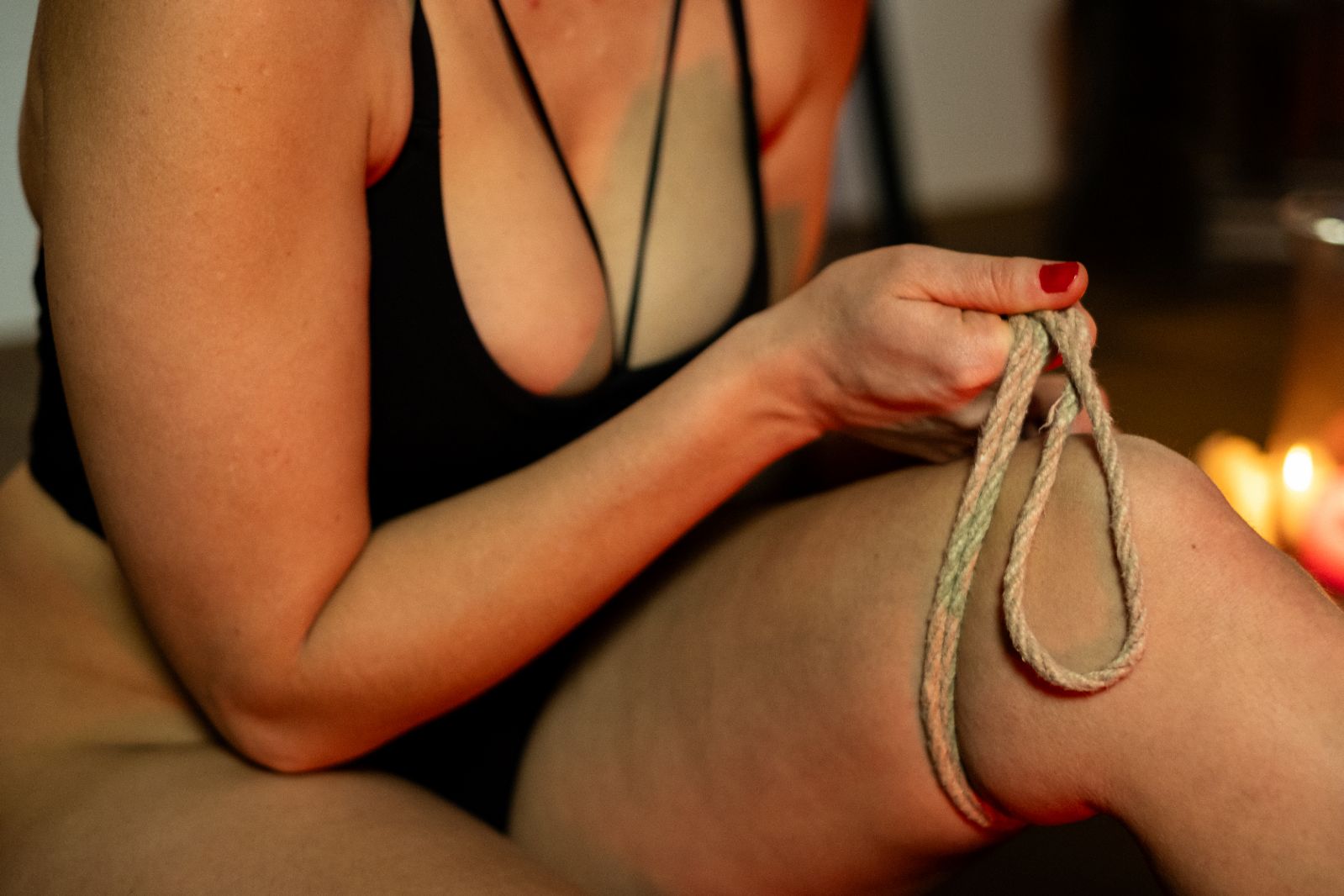
My first encounter with shibari was a hot one. I made my debuts being tied up by this friend of mine and it quickly turned to be a very erotic experience pleasing a partner with my hands behind my back. I will never forget that moment and I still very much like to use this technique now that it is my turn to tie and get pleased ;)
During covid I developed my practice through a screen with a very skilled Berlin-based Domina, Caritia. It is an art that requires a lot of practice. Tying up the same thing over and over again until we can do it eyes closed. There are different ways of learning, either repeating the same thing that we know works well, a specific harness for example or we can understand how it works, get creative and improvise. I like to do a bit of both, having a structure and tricks help to see on the moment what would work depending on the body of the person in front, the vibe I want to create and the existing constraints like a chair, a table, unaccessible body parts or uncomfortable positions.
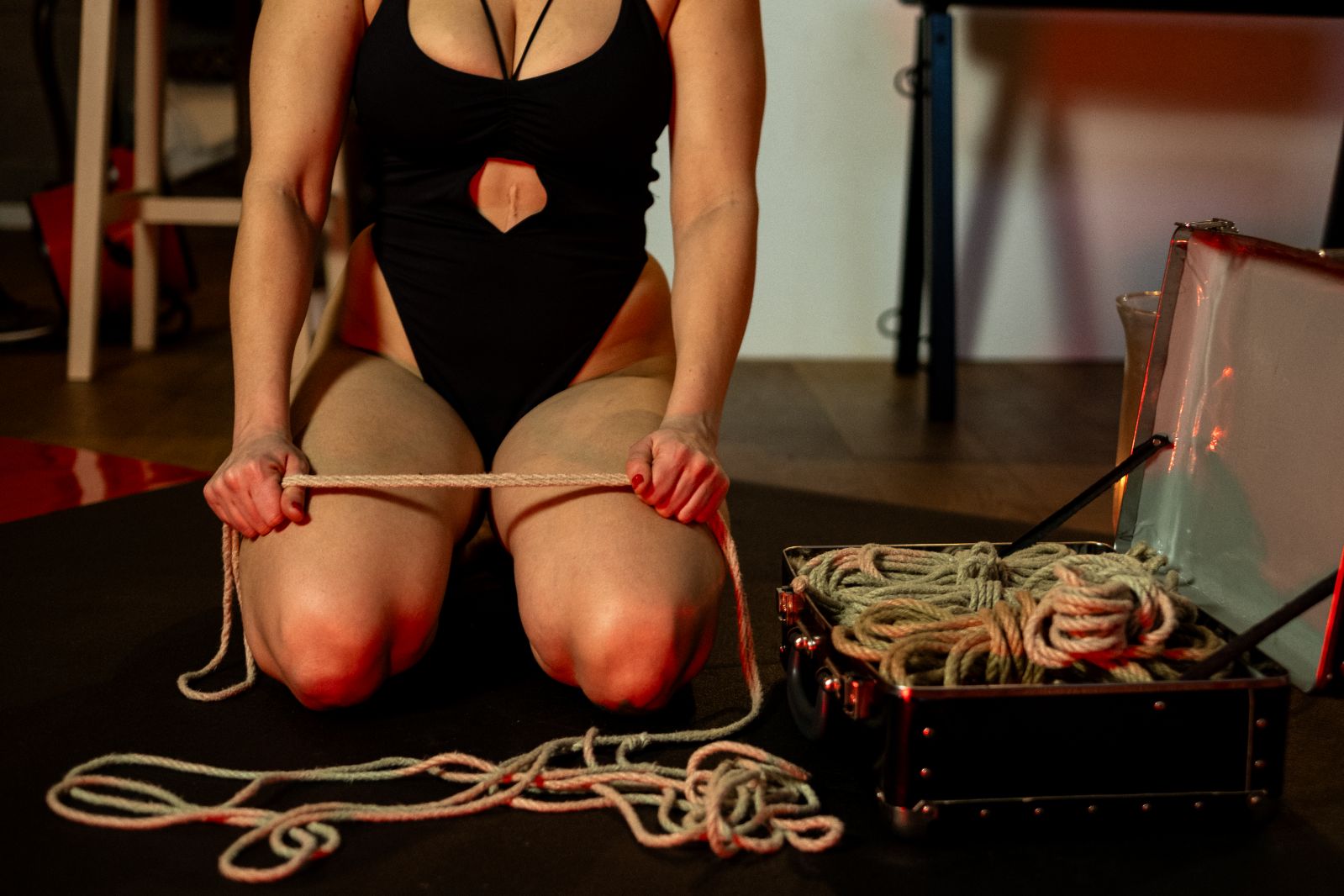
Isn’t rope tying dangerous? It can be yes. Rope is a form of restraint. It constraints the body and depending on how we are tied there is more or less pressure applied to different body parts. That is why it is always good to follow courses before starting tying up. I have followed countless classes and I am still practicing and getting trained not only to know how to tie and play but also to do it safely. Certain positions and pressures on some parts can create bodily sensations and reactions: from tingling to numbness, from a rope burn to the ache of the body in some positions. During a session I check with you how you are feeling and how your body reacts, I adjust the ropes, I pay attention to how long you stay in which position. I also ask you to do some check-ups yourself. All bodies react differently so it is an adjustment and it is also why I prefer a long lasting relationship in general and especially in rope bondage because over time I get familiar with what you body can or cannot endure. Only then we challenge the body and the mind and push some boundaries further.
It’s also entirely possible to get marks from playing with the ropes. There are two types of marks: flesh marks, which fade very quickly—usually within a few minutes or hours—and blood marks, which are deeper and redder and may take longer to disappear. The likelihood of getting marks varies from person to person, and even though I know which types of restraints and positions leave more marks than others, it can happen that a person’s skin marks even with minimal pressure. Blood marks are rarer and usually occur during (semi-)suspension or under very intense pressure.
In BDSM in general there can be a feeling of being high during or after a scene as the result of the endorphins and neuroadrenaline flowing in the body in reaction to pain and excitement. It is particularly the case in a shibari session because of the tying, the binding and the pressure of the ropes on the body. You can feel high or giggly. There can also be emotional release that you are more than welcome to have. BDSM and shibari go beyond simple sexual explorations. It opens up deep and sometimes emotional containers within ourselves. For those sessions I pay extra attention to have enough time to land afterwards before going back into the world.
While I often use rope bondage as one part of my scenes I also do sessions that mostly focus on shibari. In that case it is good to have an intention or a direction: what is it that you look for in being tied up? Is it mostly erotic or not necessarily? Do you enjoy pain or prioritise comfort? Do you prefer playfulness and humiliation or a more meditative tone? Those are all questions that you should ask yourself while booking a session.
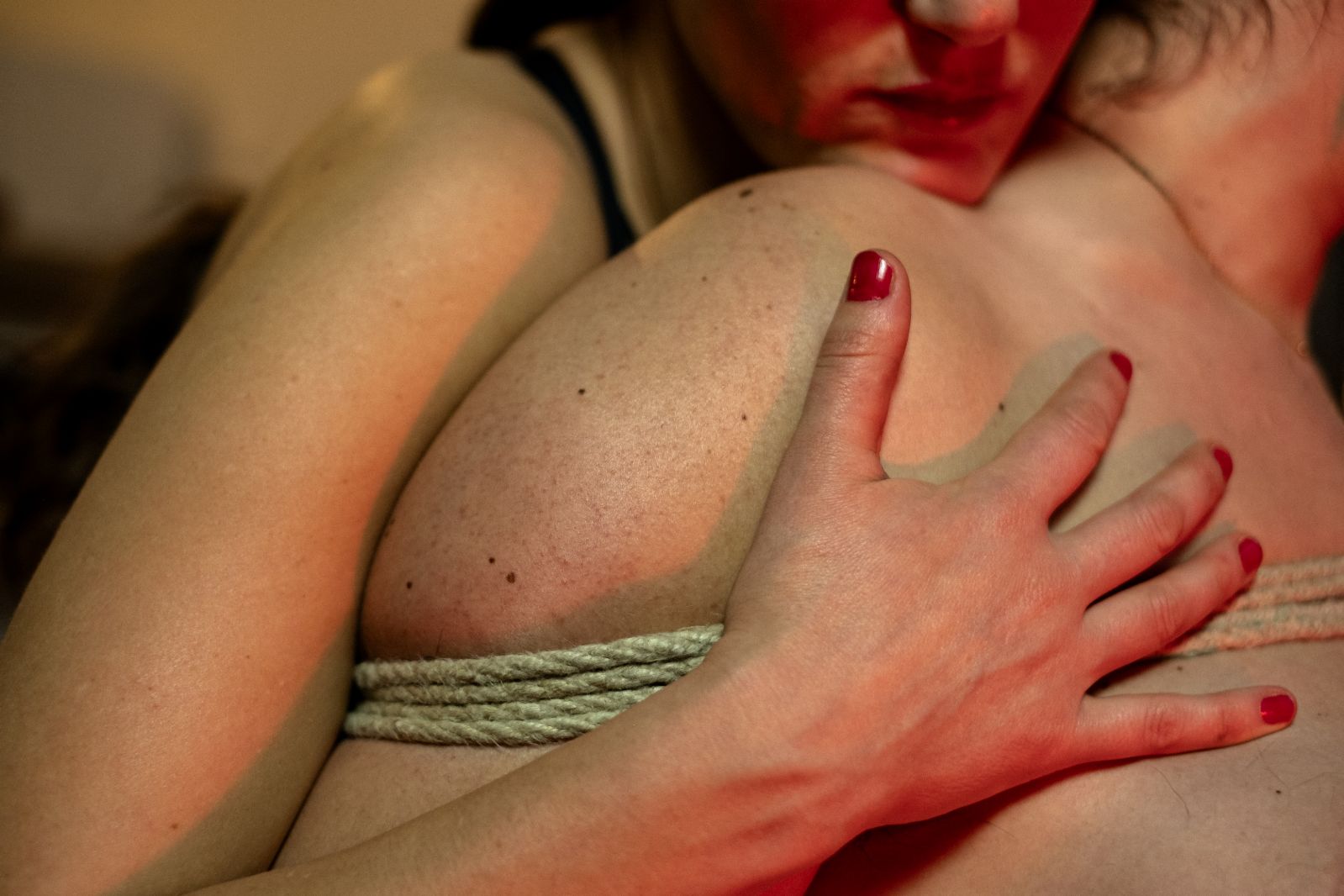
For me the joy that comes from tying up with rope is nothing comparable with handcuffs. When I prepare my sessions I like to think in which position I want my submissive to be, which part of their body I want to access and what I am planning to do with it.
After I position you where I want you to be, on a chair, standing, sitting, lying, under the bamboo, I like to blindfold you, if possible. It is a way to both get in our zone and sharpen our senses to feel the connection between each other. I want to know who I have in front of me and email exchanges prior a session are only the start in getting to know each other. I like to start with simply using my hands on your body, feeling your skin, touching it, caressing it, massaging it and grabbing it. Once I have a feel of who is in front of me, then more ideas come and creative juices flow guided by my own desire to take control and Dominate. This state of mind also called Top-space and its counterpart called sub-space are both altered states of consciousness enabling us to be deeply present and connected.I then like to take my time walking to the little suitcase that contains my ropes, choosing the one I am going to start with. I like to slowly but firmly untie the bundle of rope letting it fall on your laps or your chest. I want you to feel the contact of the hemp rope on your skin. There is a reason why I uncommonly chose hemp rope instead of jute. I like the feeling of it very much, so smooth... but maybe I should actually also get a pair of jute rope when I plan to be extra mean and painful…
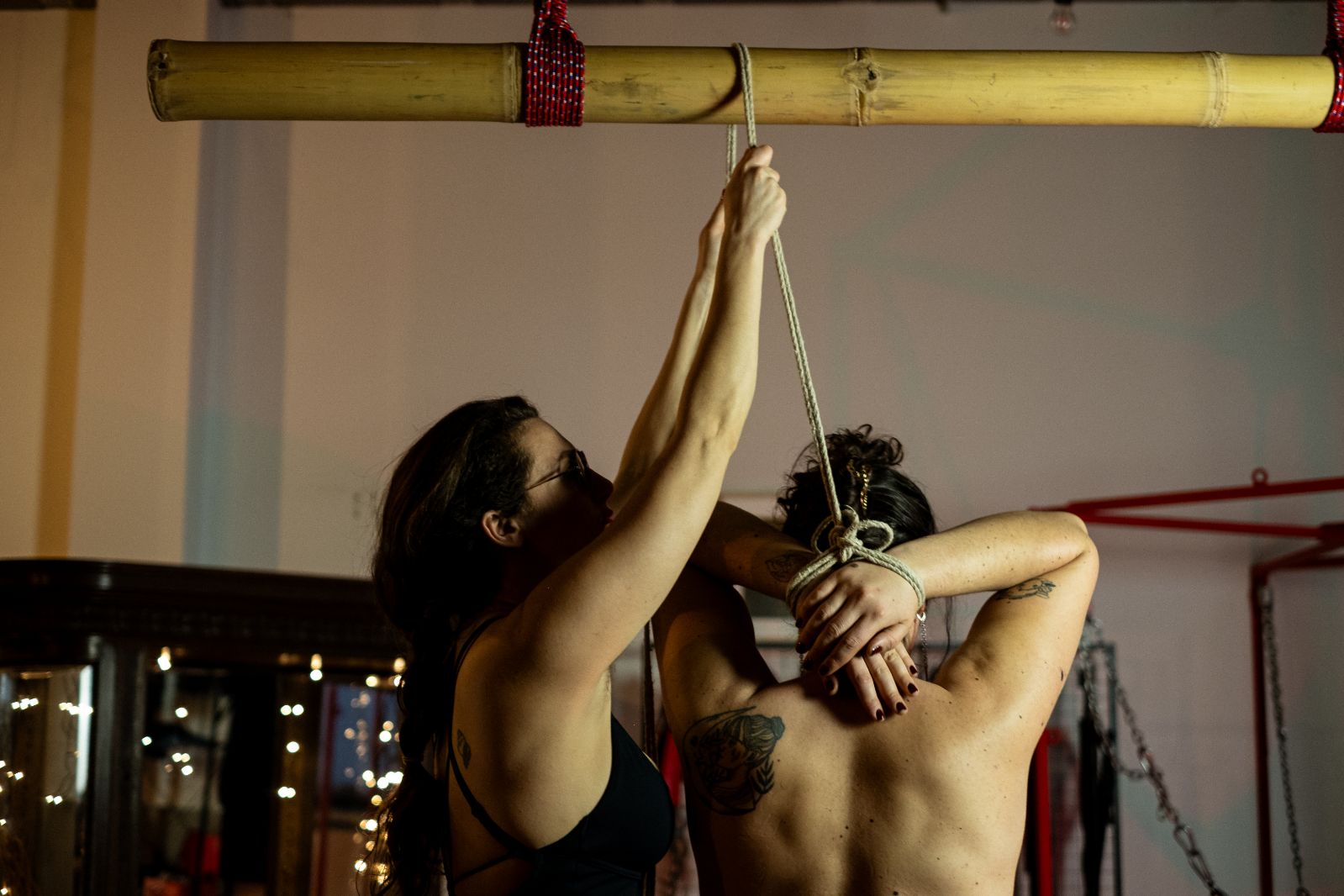
I want you to sense all the possibilities of this piece of rope, how soft it can be, how it smells, how heavy it is on your head, how strong it can become when I start adding tension. I want you to feel both at ease - giving me the power of retraining you is huge but I also want you to feel with each breath who is in control here.
I like to take my time pressing the rope against your body, applying pressure with every centimetre of skin covered. I like to take my time doing beautiful frictions that you will probably not see but as a Domina I like to see beauty in my sessions. We say frictions and not knots for a reason. We don’t tie knots, we simply prevent the rope from moving by adding frictions between pieces of rope. Sometimes we add a little knot at the end, just to secure the last bits.
I like to watch what I have done, again admiring the beauty of the body inside the rope, the patterns drawn on the skin, the flesh contained in the newly created net, the powerlessness of you as my sub.
And now that this part is over I can start playing with you…
Sources:
- On Seiu Ito And The Origins Of Kinbaku, shibari study
- Introduction To Shibari: A Brief Explainer, Ena Dahl, shibari study
- Why Does Shibari Get You ‘High’? Ena Dahl, shibari study
- The History & Myths of Japanese Bondage, Midori
 See all articles